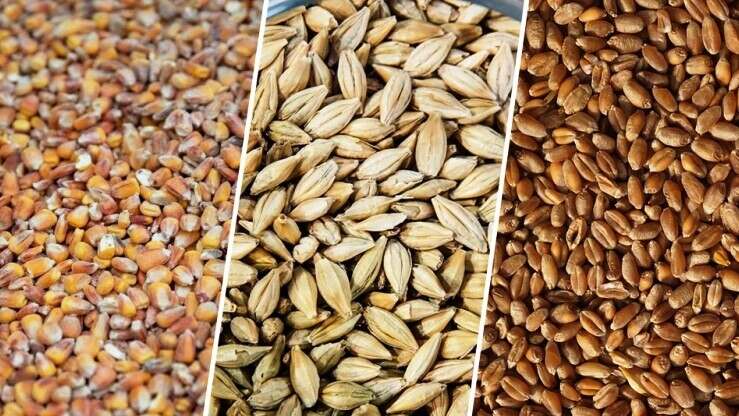
In the first half of the 2025/26 marketing year, Ukraine’s grain exports developed at a restrained pace amid high global supply, logistical challenges, and growing competition, ProAgro Group reports.
According to market analyst Maksym Kharchenko, despite the availability of significant grain stocks, there are currently few grounds for a substantial price increase.
Wheat
From July to December, Ukraine exported about 7.8 million tonnes of wheat (–20% year-on-year), representing 47% of its annual export potential. Before the full-scale war, 65–75% of annual wheat exports were typically shipped in the first half of the season. Although large stocks will remain after the traditional winter slowdown, high global harvests and competition from Australia and Argentina are expected to keep prices under pressure. Egypt, Indonesia, and Algeria remain the key buyers, while EU demand has declined sharply due to reduced import quotas and higher domestic production.
Barley
Barley exports for the first half of the season reached approximately 1.2 million tonnes (–37% y/y), or 46% of export potential. China was active early in the season, followed by demand from Turkey and MENA countries. At the same time, barley prices remain the highest within the feed grain segment.
Corn
Corn exports from September to December are estimated at around 5 million tonnes (–34% y/y), marking one of the weakest starts to the season in the past decade. Late harvesting and logistical constraints limited shipments. Currently, exports depend mainly on demand from the EU and Turkey, while the first Panamax shipment to China has only partially supported the market.
The analyst concludes that Ukraine is entering the second half of the season with sufficient grain stocks, but weak demand and strong global competition are limiting price prospects and forcing exporters to seek new sales markets.
As reported earlier, as of January 2 Ukraine had exported 15.43 million tonnes of grains and pulses since the start of the 2025/26 marketing year, which is 6.4 million tonnes (29.4%) less than at the same date last season.
Source: UkrAgroConsult