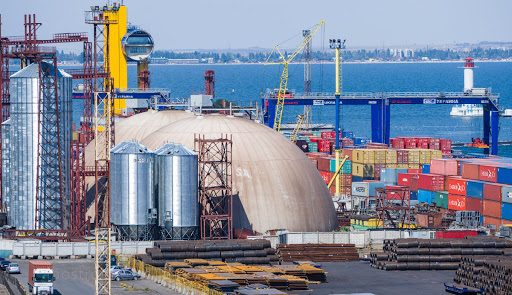
Since the start of Russia’s full-scale invasion, Ukraine’s agricultural sector has suffered losses exceeding $100 billion: large areas of farmland remain mined, port infrastructure is regularly shelled, and production and export volumes have declined, ProAgro Group reports.
At the same time, the industry has managed to preserve its core production potential, said Oleh Khomenko, CEO of the Ukrainian Agribusiness Club, during the sixth strategic PeaceBread meeting held as part of the international Grüne Woche exhibition in Berlin.
He emphasized that despite the war, climate challenges, and economic instability, Ukraine’s agricultural sector remains a crucial pillar of food security for both Ukraine and Europe.
“Logistics is currently the main challenge,” Khomenko said. “Before the war, 94% of agricultural exports were shipped via Black Sea ports. In 2022–2024, Ukraine was forced to reroute exports through alternative corridors. The restoration of the Black Sea corridor in 2025 was critically important, but ongoing shelling of ports continues to generate risks and additional costs for businesses.”
Additional pressure on agri-logistics and exports comes from macroeconomic factors—hryvnia depreciation, power outages, labor shortages, high interest rates, and limited access to financing. Taken together, these factors are gradually reducing the competitiveness of Ukrainian agricultural products in foreign markets, the UAC CEO noted.
According to Khomenko, climate change further complicates the situation: over the past three decades, Ukraine’s average temperature has risen by 1.2°C, leading to droughts in the south, floods in the north, and added risks to the stability of production and logistics chains across the agricultural sector.
Read also: Cargo transport imbalances threaten agricultural production and Ukraine’s economy.